Showing posts with label 10. Show all posts

2016-09-14

2016 Pelican 3310PL – 378 Lumen Edition


 Pelican 3310PL, lights on

Concept: 5 out of 5
Execution: 5 out of 5
Yeah, but: Pelican Ugly.

The Long Version: The Pelican 3310PL is the best flashlight ever created. It's probably also the least sexy flashlight ever created, but even that’s part of its appeal. There have been a few generations of the 3310PL, so make sure you're buying the new one with “378 Lumens” clearly marked on the packaging.

That headline feature, the 378 lumen output, is a tremendous output from such a small light. It’s easily the brightest light I own. But better than that, it also has the most useful light output of any I own. It combines a very tight long-throw beam with a very usable and smooth spill that's brighter than my favourite flood headlamp. It’s rare to find a light that gets one of these right, let alone both. Perfect for exploring a haunted house. And, sensibly, the light defaults to high power when it’s turned on, but has two more settings as well.

The low-powered setting on the 3310PL puts out 39 lumens, which is still better than the best efforts of so many lights from just a few years ago. That's enough for a huge range of tasks, and much better than the full output if you need to use it at close range. At this level it’s useful but not blinding, while the spill still provides enough oomph to light the peripheries. So whether I'm looking for a pair of shoes in the back of the closet, or lighting a stairwell in a power failure, the 3310 is effective and useful.

The third mode is a 1hz strobe. This is a bit unfortunate, since it needs to be clicked through when switching from low power to high, but at least it's a slow flash. It could be used as a location marker for an air drop or rescue attempt, reflecting the 3310's serious-yet-practical possibilities. My other flashlights might do a faster strobe, intended to disorient my enemies in combat, or a cutesy "SOS" pulsing pattern that I'd rather not use for a great many reasons. So while I would prefer not to have the strobe mode complicating things at all, it certainly could be worse, and perhaps some day it might actually be useful.

The three options in the "pick two" joke for flashlights are usually Bright, Small, and Long-Lasting. The Peli 3310 really does pull off all three. It's not small enough to be an “everyday carry” penlight, but it can be tucked in a back pocket easily enough when needed, and adding it to a jacket or a bag is trivial. And it can run on high for eight hours, which is amazing, and will last eight days on low power. Yes, days – or about two hundred hours. On just three AA batteries.

While the light doesn’t seem to have a regulator to keep its brightness level constant, there’s clearly still some kind of witchcraft involved in making this output and run time possible. Personally, I approve. And I don’t mind a light that gradually dims rather than suddenly dropping to nothing, especially when it’s this bright, for this long, and runs on batteries that are as cheap and abundant as AA’s. I have an eight-cell charger and fistfuls of low-discharge rechargeables, so forget those spendy and toxic specialty disposables.

 Pelican 3310PL, lights off

So: about that appearance. Yes, it's ugly. But it's a flashlight that glows in the dark. That's freaking awesome.

Pelican, like knife maker Spyderco, isn't afraid to experiment with practical and functional designs that don't take aesthetics into account. That's awesome, because like knives, flashlights have a bad case of the Mall Ninjas. Frankly, too many lights are pandering to people who imagine themselves to be the last warriors standing on the brink of civilization, ready to wage a battle that only they can see coming. The result is a sea of toughguy-grade aluminum torches with serrated bezels that are designed for hitting people — as if that's ever a sensible life choice. Those who want Combat-Ready Tactical Lights will absolutely hate the look, feel, and construction of the polycarbonate 3310PL. And good riddance to them.

The 3310PL is ugly and amazingly practical. Its body has a flat profile that won't roll when it's put down. The photoluminescent plastic is a little smooth, so it has thick ridges that provide a solid grip, even with gloves, but it's only ridged on the edges so that they don't interfere with its pocket-friendly shape. The result is a light that’s nice to touch, durable, light, won’t scratch, and sealed against brief water immersion. The only way I'd change its design would be to give it a flat base so that it could tail-stand more easily. This light has ample power to light up a room, and enough run time to make that a practical option. But Pelican does know a bit more about flashlights than I do, and they probably concluded that even if the tail was flat the narrow body of the light wouldn’t properly balance the wider head, and they’re probably right.

Batteries load through the back of the light, which twists to open in a way that’s only slightly disconcerting. The back detaches, but remains tethered to the body, and the battery contacts move a little differently from the rest of the tailcap. The back also locks in place with a secondary mechanism, turned with a screw driver or the plastic tab on the lanyard, but this isn’t needed to keep it closed.

And have I mentioned that the entire body glows in the dark, which means it can be found immediately when the need suddenly arises? Try that with some black metal tacticool milspec battery-eater. There’s a reason why nobody sells those things with a case and hardware to mount it as an emergency lighting station for factories, which Pelican provides as the 3310ELS variant. This is a well-designed and mature light meant for real emergency preparedness, not just enthusiast preppers.

So how much would you pay to own the best flashlight yet made? Would you pay between $50-100? Most of my lights fall in this range, and the new 3310 comprehensively outperforms them all. How about over $100? It's easy to spend that much on a "serious" light if you want to. Over $200? There are lots at that level as well — there's really no upper limit. But the Pelican 3310PL costs less than $40. All that and it's one of the cheapest lights I own.

I want to buy one for every member of my family and every room in my house.

last updated 14 september 2016

2014-11-30

NiteIze GearTie


Concept: 5 out of 5
Execution: 5 out of 5
Yeah, but: You had me at "Heavy Duty Rubber-Coated Twist Tie".

The Long Version: It's possible that the NiteIze GearTie is exactly what has been missing from your life. Godlike in its simplicity and angelic in its execution, the GearTie is a flexible wire that has been coated in grippy ridged plastic with knobby ends. And as if that wasn't enough, it's available in different colours, all of which are perfect.

To be honest I really just bought the GearTie because it's immensely cool and out-of-gamut fluorescent orange. And then I bought another set because the "Lime" is an excellent green, and that's Penny's favourite colour. And am I ever happy that I did – because it turns out to be perfect for the task I had in mind for it.


I need to stop the legs of my light stand from rattling when they're stowed. I use the stand to hold my audio recorder, and don't always have room on the sidewalk to set it up properly, and instead use it as the world's tallest monopod. Stopping incidental noise is critical. The GearTie is perfect for the job, and has no problem exerting enough pressure to keep everything in place. It's even easy to attach and remove, which is more than I can say for the elastic bungie-cord thing that I also tried, and its rubberized exterior means that it won't introduce rattles or noise of its own.

Given that the GearTie works perfectly for such an oddball task, it shouldn't be a surprise that it's generally handy, too. It's strong enough to make into a hook to hang things from, can be folded into an impromptu tablet stand, or bent around to substitute for that inevitable missing lock on the only cleanish public toilet. It's even washable. And of course there are all kinds of different sizes available, each with its own tasks to be suitable for. Small ones become cable organizers, midsize ones are bent into hangers to dangle things from a shelf. There's just no reason not to have a few of them around.


last updated 30 nov 2014

2014-05-13

M.Zuiko ED 12-40mm f2.8 PRO Tech Note

1240 and 1260
Concept: 5 out of 5
Execution: 5 out of 5
Yeah, but: This is not the review you're looking for.
The Long Version:

Matthew likes to produce the occasional counter review of equipment that he doesn't own but that instead comes across the counter-top of the camera store he works at. He at least gets to handle it before passing judgement. This micro-review, which I'm labeling as a Tech Note, is in that same spirit. I don't own the 12-40mm, but I did own the 12-60mm and used it extensively.

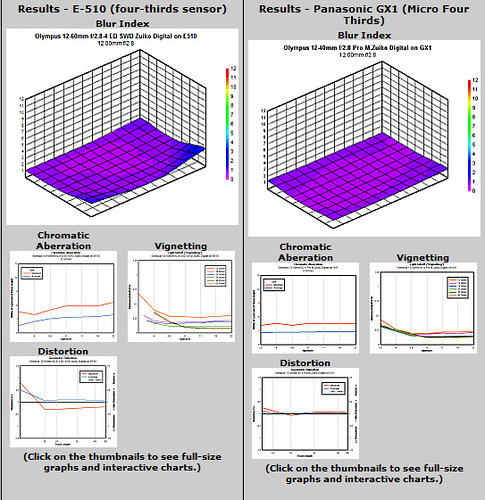
The only reason for writing this short blog post is to talk about the graphic at the top, where the test results of a Digital Zuiko 12-60mm f/2.8-f/4 (on the left) are compared to the new M.Zuiko ED 12-40mm f2.8 PRO lens on the right. I didn't make this comparison, but another photographer did on Flickr (click the image for a larger view and to go to Marty's Flickr stream).

Why do I care about the graphic? I have bellyached for some time about how Olympus isn't making native µ4:3rds versions of various 4:3rds lenses, in particular the 12-60mm and the 50-200mm. Turns out that maybe, just maybe, Olympus has decided to create newer µ4:3rds lenses that are superior to those two regular 4:3rds lenses. The charts show that the optical performance, at least via optical chart measurement, of the 12-40mm is superior to the older 12-60mm. When you compare the two lenses, you come up with the following points:
  • Constant aperture (f/2.8) of the 12-40mm vs variable (f/2.8 to f/4) of the 12-60mm.
  • Smaller and lighter 12-40mm vs 12-60mm.
  • Lower cost 12-40mm vs 12-60mm.
  • Native µ4:3rds mount of the 12-40mm, which means much faster focusing.
  • Silent operation of the 12-40mm, great for video.
The only downside (if you want to call it that) to the 12-40mm is the loss of the longer focal lengths beyond 40mm. It would appear Olympus made the engineering tradeoff to produce a shorter focal length range in order to achieve better optical and physical operation, producing by all accounts the successor to the 12-60mm. Given my personal druthers I'd trade a constant f/2.8 aperture across all focal lengths for 20 less mm in a cold New York minute.

Later this year Olympus will release its second PRO lens, a 40-150mm constant f/2.8 zoom, which just might be the superior replacement to the highly regarded (by me at least) 50-200mm. This will give the Olympus photographer an equivalent focal length range (in 35mm terms) of 24mm to 300mm in two zooms, with decent light gathering performance.

What is interesting is how those two lenses compete head-to-head with the Panasonic 12-35mm f/2.8 and 35-100mm f/2.8 zooms. Now if Olympus can just stay in business long enough to make buying these lenses worth your while...

last updated 13 may 2014

2013-02-04

Olympus BCL-1580 15mm 1:8 Body Cap Lens

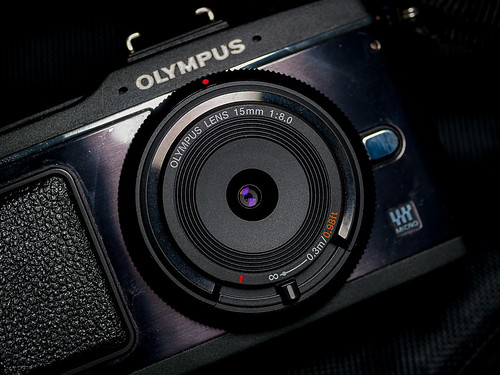
Olympus BCL-1580 Body Cap Lens
Concept: 5 out of 5
Execution: 5 out of 5
Yeah, but: So what if it's ranked 2,872nd by DxOMark.

The Long Version: There's really not a lot to say about an all-plastic µ4:3rds prime that has just three lens elements, two focusing stops, and costs a mere US$49. You can read all the more flowery prose about this optical wonder on the web by those who've purchased their copy and then written about the experience. This lens was priced so low that even I, Mr. Penny Pincher Photographer (P3), was able to buy a copy without giving it a second thought. And I can honestly say it's worth every pinched penny I spent.

In a world where Holga and Instagram seemingly reign supreme, the BCL-1580 15mm prime is a down-to-earth non-pretentious alternative that will make quite reasonable photos (given enough daylight) if you concentrate on composition and story telling instead of the affectations of ultra-sharpness, shallow depth of field, and damnable bokeh (for which there is a special place in the ninth circle of Hell for the man who coined that term).

The BCL-1580 has no autofocus. You select either the infinity hyperfocal point or the close focus point at around 1 foot from the camera. 99% of the time it'll stay on infinity. It has only two glass elements, a small outward facing lens and a slighter larger inner lens facing the sensor. The aperture is a simple hole in a piece of plastic that sits centered between the two lens elements.

Even though it's not a Zuiko branded lens, somebody at Olympus still had the good sense to at least put some simple lens coating on at least the front glass element. It doesn't need much more than that, considering its one and only aperture setting is f/8. Because it has no focus motor it absolutely has no focus noise, and with its simple hole-drilled-in-a-plastic sheet aperture it has no aperture chatter (like the far more expensive Panasonic Leica 25mm 1:1.4). When it's mounted on a Pen there is no delay in turning the entire camera on or off, thus saving battery power because you don't have to wait to turn the camera back on. And if you break the BCL-1580 or it gets stolen, so what? It's cheap enough that you can go buy a new one.

The Photographer
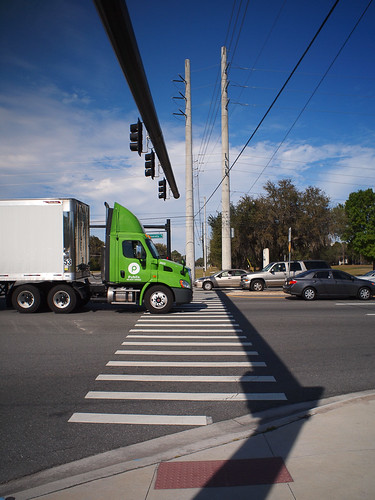
The Cross Walk
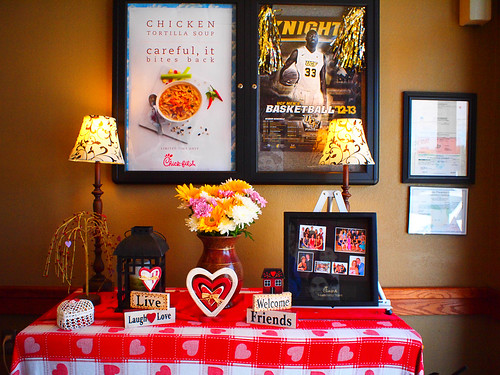
Local Chick-fil-a
Fifteen Experiments Group 1
Streaking Home

It's a lens that will work with any Pen, from the original E-P1 to the latest Pens and OM-D. It can breath new life into a µ4:3rds body that's taken to sitting unwanted on the back shelf or unloved in the bottom of your bag. The lens, combined with any of the Pen's art filters, can produce any number of charming, interesting, Holga- and Instagram-beating photographs, with any subjects ranging from the urban core to what's left of the not-so-great out doors.

Some are want to call it the ultimate street photography lens. I use a less grandiose description; to me it's just about the best documentary lens I reach for when I want to go out and not have to worry about anything. The only other µ4:3rd lens I own that comes anywhere close is the Panasonic Lumix 14mm 1:2.5. Using the BCL-1580 strips away all vanity and pretense. It makes photographs, not a statement.

This little $49 gem is the ultimate µ4:3rds lens worth owning. If you can't use this lens and take simple enjoyment in using it, then you don't deserve to own or use any other. This is camera optics stripped down to its bare essentials. All other lenses are just more expensive and gilded versions of this little 15mm.

Technical

Top hero photo taken with an Olympus E-1 and Zuiko Digital 50mm 1:2 macro, lit by a single LED light panel. The next three photographs were taken with the 15mm mounted on my E-P2, the next four with the 15mm mounted on my E-PL1, and the last with the E-P2 + 15mm.

last updated 5 feb 2013

2011-07-27

Xootr Swift: Two Years Later


Concept: 5 out of 5
Execution: 5 out of 5
Yeah, but: Little wheels even make it easier to open doors.

The Long Version: Two years ago I wrote about the Xootr Swift folding bike, and it remains one of the most popular reviews on this website. Now it's time for a follow-up.

First, a quick recap for those who arrived here directly, and don't want to wade through the original report: the Swift is an apartment-friendly design from New York City that has a simple and strong fold, but at the expense of being larger than just about any folding bike when it's compacted down. Rather than following the British model of a bike that will fit under a seat on the tube, this is a quintessentially American bike that will fit in the boot – trunk – of a mid-sized car.


The Swift folds vertically, being split on the seat tube and locked in place by two quick-releases that clamp the seat post in place. It's an exceptional use of the inherent strength of these components, and is both visually and mechanically elegant. The bike comfortably fits sideways in a storage room that's barely wider than its own doorway.

Normally the seat post will lock the bike tightly into its folded position, but my Crossrack stops it from dropping far enough down. Instead I just secure the seat tube to the top tube with a reflective ankle strap, which is actually the only time that I need one of those ultra-fashionable accessories. Small wheels mean that the Swift has an unusually large front chain ring, putting the chain too high to snag the cuff of my jeans or my shoelaces, and it even has a built-in guard for good measure. That's a huge win for the Swift.


A few things have changed compared to when the bike was new. While the stock brakes on the Swift are decent, I've upgraded to Shimano Deore levers and V-brakes for a significant improvement in stopping power. There's less flex in the system now, making the whole thing crisper and giving me more confidence on the road. Changing the brakes over was easy, and the standard-length cables that the kit came with were ample.

I've also swapped out the stock pedals for bigger platforms. I bike wearing soft shoes – inefficient but practical – and these BMX-style pedals are more comfortable and, to my eye, look better. They're nothing fancy, being about the cheapest ones that MEC sells, but if I was looking for ways to drop weight and improve performance my bike wouldn't be the one with the most work to do.

Other minor positioning and accessory refinements mean that the bike suits me even better now than it did when it was brand new. But the biggest change is that I've replaced the stock Kenda Swift tires with Schwalbe Big Apples. These tires are relatively famous, and really change the personality of the bike. I've split off my experience with them into a separate review here.


During the riding season my Swift stays out on the balcony, and I have to admit that I don't pamper it. Two years have left rust on the bolt of the quick release that holds the handlebar riser in place, as well as faint hints of rust on the riser itself. The chain shows some rust, as chains will do, but the other quick releases are clean. There was also some rust on the curved brake cable guides, the part right above the brakes themselves, but those are gone now.

Aside from that there are a few more nicks and scratches on the frame, and the half-grip on the right side of the handlebar needs to be snugged back into place occasionally. I could just fix that with some cheap hairspray, but now I keep it in place with a bar-end bell instead. And that's it – aside from those very minor instances of wear-and-tear, the bike is just as solid as it was when it was brand new. There's no new wiggle, no extra flex, no movement in the frame pivot and no creaks or rattles.


I fell in love with the Swift as soon as I took it out on the streets, and I'm still just as happy with it after these two years. Last summer I had a delusional episode and considered switching to skinny tires and clip-on bars, because I have no doubt that some lighter components could make the Swift into a respectable racer. I'm nowhere near fit or dedicated enough to pull that off, but it's nice to know that it's possible. For the bike, at least. As for me, I'm perfectly happy with having a tough and versatile commuter bike that I can have some fun with on the weekends.

After two years I still have to give the Swift a perfect score, which is something I almost never do. In a world of compromises and design decisions, I really can't see how Xootr could have made a better bike for less money. The usual caveat of making sure that it's the right choice for the purpose remains: it's a small-wheeled bike that folds down a little, instead of being a cubic foot of components that latch together into something ridable. But aside from that, I'd recommend the Swift for anyone who's looking for a folder, or even for anyone who just wants a great all-purpose urban bike. I'm looking forward to many more happy years with mine.


last updated 27 july 2011

2011-06-28

Elsewhere on the Web: Rob Beschizza reviews the Energizer Flickering LED Candle


Concept: 5 out of 5
Execution: 5 out of 5
Yeah, but: Fuck it, let's review it anyway.

The Long Version: I can't think of the last time I laughed this hard at anything, let alone a product review. Rob Beschizza (of BoingBoing fame) has posted an audio review of the Energizer Flickering LED Candle.

Hear it on SoundCloud or via BoingBoing.

I have it playing in a loop through iTunes, and I can't even begin to choose my favourite part. It's a must-listen.


last updated 28 June 2011

2009-07-27

Xootr Swift Folding Bike


Concept: 5 out of 5
Execution: 5 out of 5
Yeah, but: Forget that it folds.


The Long Version: I've been riding the Xootr Swift bike for ten days. I usually like to have more experience with something before I review it, but with summer ending, I'm hurrying this one along.


Some Background:


The Swift is the second vehicle that I've bought from Xootr, with the first being the Mg scooter that I reivewed in two parts - one and two. But Xootr isn't as well known on the bike forums that I was sifting for recommendations, so even after I decided to supplement their excellent scooter with a small-wheeled bike, I spent a lot of time looking at other brands. To make a long story short, I was actually trying to buy a Bike Friday Pocket Expedition, but couldn't get an answer from their local dealer when I e-mailed - twice - to ask how much it would cost. The frustration led me to look elsewhere, so I started researching the Swift.


I was surprised by what I learned. The Swift isn't a Xootr original, but rather was designed and built by an independent maker in New York city. (Swiftfoldersdotcom has more background.) Remarkably, it's still available from a variety of sources, of which Xootr LLC is only one. So if you want a custom steel frame with an exotic mix of components, it's available from its original designer. If you want a mostly-stock aluminum one that will ship the same day that you order it, you can do that too.


Getting the Swift on the Road:


The Swift arrived in a remarkably small - 9"x25"x35" - and light box. The bike has 20"/406 wheels, which are the same size that BMX bikes and most folders use, and they really cut down on the size of the package. The frame is reminiscent of Gary Turner's designs, with the seatstays crossing the seat tube and being joined to the top tube. But this join isn't a weld, it's a hinge: the seat tube is two pieces, held together by the seat post, making the bike into a remarkably light and strong folder. This also makes the shipping charge reasonable, although I do need to warn my fellow Canadians that the default shipping method is UPS Standard with its wicked hidden fees. I contacted Xootr ahead of time, and we compromised on a UPS Saver service that cut the costs down considerably. UPS outdid themselves and managed to deliver it to the right address on only their third attempt, but I digress.


The only tools needed to assemble the Xootr is a hex wrench, which they include, and a pedal wrench, which they do not. I have one, but a pair of needle-nose pliers or vice-grips should also work to give the pedals one last twist. A #1 philips screwdriver is also handy to tweak the brakes. I'm used to doing my own basic bike maintenance, and had it assembled and ready to go in about twenty minutes. That's longer than the ten minutes that I've read about elsewhere, but my time includes the full unboxing-to-ridable process. The bike arrives really, really, really well packaged. The frame is bubble-wrapped, zip-tied, and sheathed in heavy paper to prevent scratches. It took at least ten minutes just to get it unpacked. I recorded the whole thing on video, but I've cut the unwrapping and some of the instruction-reading to manage its length. Even on fast-forward, it's not the most fascinating, so I offer it only for those who have a serious interest in buying the bike. Casual readers are welcome - nay, encouraged - to skip it.


As you can see, putting together the front quick-release skewer stumped me for a while. I've also cut out some of the twiddling: the pedals and stem took more cranking than what you're seeing here. One other thing that you might notice is that I didn't need a pump. The tires come fully inflated and ready to ride.


Accessories:


When I ordered the Swift I added the Thudbuster suspension seatpost, Crossrack, and fenders. The thudbuster is a clever design that works well, and the one that Xootr includes - for the same price that the manufacturer sells it at - has a post that's the correct diameter. The method used for rigid bikes is to use a narrow seat post and a shim to make it into a one-sku-fits-all system, but since the seat post is integral to the strength of the Swift's frame, DO NOT DO THIS. Get it through Xootr. You could order the correct size through Cane Creek, but that's more work.


The Crossrack attaches to the seat-post and holds a standard pannier. I like this system because I want to carry a camera, and this position both protects it in a crash and suspends it from the shocks of resting on top of a regular bike rack. All told it's a great design. The only catch is that it attaches to the seat-post, and stops it from dropping down and locking the frame in its folded position. If you're looking to use the quick-fold ability of the Swift, it's not the greatest addition. The counterpoint is that the Swift is probably the largest-folded folding bike on the market, so it's probably not a big loss for anyone who would consider buying it.


Xootr also sells a bag for the crossrack. The reflective stripe that goes all the way around the Xootr bag is useful - not many panniers are styled for being carried sideways. I would have bought it as well if I hadn't found a convertible bag that is both a pannier and a daypack from MEC. It also has reflectors on three sides, and adds two water-bottle pockets. The Swift doesn't have any braze-ons to attach a water bottle cage, and since the combination of the crossrack and thudbuster precludes using the bottle cages that attach to the back of the seat, this is something worth considering.


(Updated September 2009: I've since spotted two little bolts on the steering riser, and Xootr's website confirms that these are spaced for a bottle cage. Handy.)


The fenders were also bought with the bike from Xootr. They're made by Planet Bike, and are sized to fit the frame and small wheels. I looked for local options, to keep the customs value down, but 20" fenders aren't that common. They're basic and functional, not terribly expensive, and have already saved me a couple of times. Like lights and a bell, they're essential for urban riding.


And Speaking of Riding:


I've never ridden another folding bike, even for a test-ride, and I haven't had 20" wheels since I got tall enough to trade my BMX for a ten-speed. My only recent point of comparison is a wickedly fast road bike with a stiff aluminum frame cushioned by the best suspension seatpost ever designed. The Swift feels just as solid and quick as that old road bike. The little wheels needed a little familiarization, since they really are more nimble than their bigger cousins, and it feels like I could do a wheelie every time the lights turn green. It's a fun bike to ride. I may not be able to keep up with the peloton any more, but I never really could, and it's probably not the Swift's fault.


The Swift is a very sprightly little bike. I'll admit that I wasn't instantly taken by its styling, but now that I see it in person, it makes a lot of sense to me. Performance bikes designed for triathlons have smaller wheels than normal road bikes, and the Swift looks like it was taken to the logical extension of that practice. It just looks like a sporty bike, in ways that curved-frame bikes like the Brompton and Dahons don't. Its relatively high top tube makes it look more like some fancy mountain bikes than a bike that aspires to be luggage. The lack of a cut-in-the-middle hinge has left some people surprised that it can fold.


Born in New York City, this bike is a natural urban commuter. They come equipped with the 65psi version of the Kenda Kwest tire, which have a great reputation, and haven't let me down so far. And while the bike is new, so there's no accumulation of grease and oil on the wheel rim and brake pads, it's worth noting that the brakes are almost frighteningly good even in the rain. During one recent storm I accidentally locked up the rear wheel while sympathy-braking for a cyclist immediately ahead of me who was cut off by a taxi. They're not particularly high-end V-brakes, but they work.


The drive-train consists of a large single front chain-ring and an eight-speed 11-28 cassette on the back, with horizontal rear dropouts that will accommodate an internally geared hub or a single-speed setup. The stock gear range is plenty for this essentially flat city; I spend most of my time in gears 3-6, and the only time I've used the lowest gear was to climb some reasonably steep trails. One of those is the gravel access road to a nearby ravine that was extremely loose after several days of sporadic rain. Naturally, I had the Xootrcam rolling for my first off-road excursion.


Slick tires do very well as long as the surface is solid. Pavement is great, wet or dry, and hard-packed dirt is easy. Soft surfaces: not so much. The hill at the mid-point of the video above is loose sand that's had gravel sprinkled over it, and going down it on a new bike with small wheels was recklessly stupid. Climbing it on the way back was merely dumb. I debiked when the rear tire went sideways as I tried to turn in soft sand; proper technique, lower tire pressure, and/or knobby tires probably would have gotten me through okay. The good news is that the low stand-over height of the Swift means that it was a relatively graceful recovery, and I never stopped moving forward. I just walked the rest of the way to the top, and kept up about the same speed.


Off-road riding was never going to be a big part of what I do, but it is nice to have a bike that can handle the park trails within the city.


The Swift is an easy and fun bike to ride. The small wheels give it a different character and define much of its personality, but there's little compromise in weight or rigidity in exchange for its folding ability. Think of it as a rigid bike that's easier to get through doors. When winter comes, it will take up less space, but ride-ability has clearly been a bigger priority than fold-ability. Folding for the original Swift was considered more of an anti-theft bring-it-inside feature than a crowded-train-commuting necessity, so make sure you're buying the right bike for your needs.


Speaking of anti-theft, locking a bicycle is always a poor alternative to having it somewhere secure inside. But when the seat post of the Swift is removed, the bike is free to fold. Locking it in a folded configuration is bound to confuse people, but also shows off the value of the bike. Instead, I'll just lock the Swift normally and bring the seat post (with its attached crossrack and bag) with me when I need to run in to a store. I suspect that trying to ride the bike without the seatpost to hold it together would end badly and quickly.


But why...?


As an enthusiastic Xootr Mg kick-scooter rider, why did I buy a bike? The scooter is also fun and efficient, and for short distances its slower speed is compensated for by how easy it is to deal with when not riding it. It's easier to get through doors, and there's no need to lock it up and/or leave it somewhere else. For my little 2km-ish commute, it's probably the better choice. But I'm on my feet most of the time at work: a bike lets me sit down, and pedaling is easier than kicking. But the big reason to add a bike is for the recreational exercise and the ability to get to places that I wouldn't otherwise go. I've said it already, but this bike is great fun to ride, and it's practical too. It has a longer range than the scooter, and mixes better with traffic. There may not really be a need for both, but there's certainly room for them.


The One-Month Update:


I've now had another twenty days on the Swift, and have liked it more with every ride. It's quick, agile, and still stable enough for me to ride without hands - something I've never done before. Granted, I can't do it for very long, but once again that's my fault and not the bike's. While my longest ride has yet to break 20km, the bike is comfortable, reliable, and lets me play in traffic with the best of them. I'm capable of rolling along at a pace that lets joggers pass me and then jumping up to a speed that lets me merge with the cabbies when something blocks my lane. I can't think of a better bike for my urban riding, and see no reason why I'd ever want big wheels ever again.


I've adjusted the seat to a flatter and more comfortable angle, and lowered the crossrack a touch to make it easier to get the pannier on and off of the bike. I can't quite find a way to fit the lock - a Kryptonite Evolution Mini - onto the seat-post without bumping into it with my leg. If I shift it back far enough that I can barely get it out past the pannier, then I almost don't bump into it, and it's good enough to get by. I'm also going to move the left brake lever over a bit, since it's sized for a grip that has the bulk of a shifter next to it, but the front-dérailleur-less Swift didn't take that into account when it was being put together at the factory.


Next spring I may start switching out some components. The stock pedals aren't bad; they're grippy and light, but they're also cheap and aren't the aesthetic highlight of the bike. The stock Kwest tires are very good, but I'd like to get a 2" Big Apple tire on the front of this New York design, and a faster 100-psi 1.5" slick on the back. I think that'll give a great mix of comfort and speed on my thudbuster-equipped ride. New brakes and levers might also be in order, but that's getting to the point of changing things just for the sake of changing things. What can I say? I love to tinker and accessorize.


I realize that there's no such thing as a 'best' or 'perfect' bike, because everyone will have different needs and desires. There's no best camera, car, or shoes, either. But no matter how hard I try, I can't find anything to complain about on the Swift. Sure, it would be great if it was outfitted with top-tier components and was given out for free, but the bike is rock solid, shifting is snappy, and it's quite reasonably priced. After ten days of riding, I'd given this bike twin scores of 4/5, which is nearly perfect. With a few more kilometers under the tires, I've had to bring it up to a perfect 2x 5/5. This is only the third time in I've given that score in over a hundred reviews, and I don't do it lightly now. I just can't find any reason for it not to get the top possible marks.


Updated 27 July 2011: my two-year report on the Xootr Swift can be found here. But in a nutshell, I still like it.

2009-05-04

Matthew's Getting Married!


Concept: 5 out of 5
Execution: 5 out of 5


The Long Version: No date yet, but we're thinking about Fall 2010.


Ring design by Leif Benner.

contact me...

You can click here for Matthew's e-mail address.