Showing posts with label BillBeebe. Show all posts

2014-10-07

Panasonic DMC-GX7C, Body Only


Concept: 4 out of 5
Execution: 1 out of 5
Yeah, but: Buyer Beware
The Long Version:

The Purchase From Amazon

Reader beware. I'm coming at this review with a very big chip on my shoulder. Here's why.

I purchased a Panasonic GX7 black body from Amazon because it was marked down over a 1/3 from its original MSRP. Now when I purchase a camera body, I expect a camera body properly marked and boxed. That's not what I got. The seller, Web Offers, sold me a broken up body plus lens kit, where the lens had been removed (I assume to sell independently when the 20mm was selling for $100 and more over its initial MSRP). It was not advertised as such on Amazon.

When the box was opened and the body unwrapped, the body/sensor cavity was open, the body cover in another part of the box. Even the box listed the 20mm as part of the overall kit. Web Offers had to have known what it was doing, or what it had. The original SKU label was papered over with another sticker that said "Body only..."

I never expected to get such from a trusted vendor like Amazon. This is the kind of shady behaviour I expect from eBay. My trust in Amazon has taken a bit of a hit over this, especially over sale items Amazon fullfills but are sold by another seller. Mere fulfillment by Amazon isn't enough of a guarantee of quality it would seem. 

Pros

Image Quality

I ran my tests primarily with the Olympus 1.8/17mm lens, but over the short time I had the GX7 I also tested with the 1.8/45mm, the 12-50mm kit zoom and the Panasonic Leica 1.4/25mm. The GX7 handled all of them smoothly and without any issues. From a practical standpoint, focusing with the GX7 in normal Florida light was as fast as the E-M5, or close enough as to be irrelevant as to which was faster.

The GX7 has a 16MP 4:3rds sensor matched with a contemporary Panasonic Venus Engine. For all intents and purposes, the output of the GX7 is indistinguishable from the E-M5 when used as a standard digital camera, that is, using either the EVF or the rear screen to compose and tripping the shutter with the shutter button. There is, however, more to today's cameras than just image quality.

Cons

Handling


I have read the phrase "falls easily to hand" so many times that I'm sick of reading it. The GX7 does not "fall easily" to my hand. I own a number of µ4:3rds bodies; the Olympus E-P2, the E-PL1, the Panasonic GX1 and the Olympus E-M5. I even have a Sony NEX 5N. I know how these small cameras should handle. All of them, in various degrees, have been easy enough to hold, especially over prolonged periods of time. The best handling camera I own by far is the E-M5, and that's whether I have the HLD-6 horizontal grip bolted on or not (I don't usually shoot with the vertical grip).

When I'm out using a camera I walk around carrying my camera in my right hand so that it's quick to bring up and use. Using the GX7 in this manner is awkward and becomes fatiguing over time compared to my other cameras. I attribute this in part to the GX7's oddly asymmetrical design, the most asymmetrical I've held to date (with the notable exception of the NEX 5N, perhaps).

Unlike all other µ4:3rds camera bodies I own, the lens mount is shoved to the right edge of the body (forward view); the lens release abuts the edge. Even the GX1 lens mount isn't pushed that far. Add in the large soft lump on the left that passes for the grip and it makes for an awkward combination with any lens, the larger the more awkward. The best handling combination was with the 17mm, followed closely by the 45mm. The worst was a tie between the 25mm and the 12-50mm zoom.


The differences between the GX7 and the E-M5 is not just the front grip but also the back thumb grip; to whit, the E-M5 (and E-M1 and E-M10) have a substantial thumb grip, while the GX7 does not. I believe It's that back thumb grip that allows me to hold the E-M5 with a more relaxed grip. With the GX7 I unconsciously believe I'm constantly ready to drop it because I don't have the same assuring tactile feedback.

The buttons turned out to be very sensitive to touch, so much that the would register a double hit, causing me to skip say a menu entry. It got tiresome having to go back very carefully one step. The worse button by far turned out to be the video button. It is flat against the top deck, right up next to the dial surrounding the shutter release. It was very uncomfortable to reach over and release, a far cry from the far easier button on the E-M5

EVF

The EVF does indeed suffer from rainbow shearing. It's particularly egregious around the white text at the bottom of the EVF. It was so bad that in the end I found myself using the rear LCD almost exclusively. I found the EVF tilting feature a bit of a waste of effort. I've got an Olympus EVF that fits my older Pens, and I've never been all that enamored with its tilting capability either.

Rear Screen

What finally drove me batty was trying to work with the touch LCD on the back of the GX7. My E-M5 has a reasonable oleophobic surface on the screen, which tends to keep my oily fingerprints off and helps to me see what the screen. The GX7 screen was constantly picking up finger oil, which was constantly forcing me to wipe it with a micro fiber cloth.

The GX7 touch screen was almost too sensitive at times. I would inadvertently touch a part of the screen, triggering an exposure, and relocating the focus point. In the end I disabled the touch screen and just used the buttons (those wonderfully over sensitive buttons) to move the focus point if I needed it moved.

The E-M5 touch screen, by comparison, is a joy to use. If there's one feature Olympus nailed with the E-M5 it's how the touch-to-trigger-exposure works. It works flawlessly on the E-M5, and as I've recently discovered, on the E-M10 as well.

Summation

If I had to make a choice between the GX1 and the GX7, I'd choose the GX1. Likewise, I'd choose the E-M5 in a cold minute over the GX7. The GX7 isn't worth the money, even if it's on sale. There are better µ4:3rds bodies to be had, even from Panasonic. Consider, for example, the Panasonic G6 for the same amount of money.

The GX7 has been packed up and sent back to Amazon. In it's place I purchased an Olympus E-M10 body, which turned out to be less than the GX7. It's probably what I should have done to start with, but I wanted to give the rangefinder design with the built-in EVF a whirl, thinking this would be a good fit in my camera bag. It was not

I've sworn off the faux rangefinder designs of every camera maker, including Olympus' Pen series. Funny thing is, with the Olympus EVF plugged into the Pen, the EVF sits over the lens, just like an SLR design such as the OM-D. I've learned my lesson. I'm sticking with the mirrorless SLR designs from here on out regardless of brand, and unless they go truly bonkers, I'm sticking with Olympus.

last updated 7 oct 2014

2014-05-24

X-Men: Days of Future Past

Maj. William Stryker (Josh Helman) and Dr. Bolivar Trask (Peter
Dinklage) working together to create a fiendishly complicated movie plot.

Concept: 3 out of 5
Execution: 3 out of 5
Yeah, but: Like its actors, the franchise is showing its age.
The Long Version:

I know I said I was about movied out after viewing Godzilla 2014 last weekend. The key word here is "about." This weekend I hit the early morning $6 matinee to see the latest X-Install of X-Men, "X-Men: Days of Future Past."

It was a better film than Godzilla 2014, but that's not a very high bar at all for success. What you should compare it to are all the other X-Men movies that have been produced in the series so far:
  1. X-Men - 2000
  2. X2 - X-Men United - 2003
  3. X-Men: The Last Stand - 2006
  4. X-Men Origins: Wolverine - 2009
  5. X-Men: First Class - 2011
  6. The Wolverine - 2013
  7. X-Men: Days of Future Past - 2014
If you're paying close attention you'll note the general two-to-three year release pattern in the X-Men movies, as well as a love for colons in titles. "The Wolverine" was an odd-ball, essentially released to "correct" 2009's poorly received "X-Men Origins: Wolverine." Of course that fits another pattern in the Marvel movie universe, the release of movies to correct for prior poor releases (the most classic example being "Hulk" in 2003 followed by the corrective film "The Incredible Hulk" in 2008, then again with a third corrective Hulk interpretation with "The Avengers" in 2012).

I have few regrets in life, but one of them is knowing I've seen all the movies I've just catalogued.

"X-Men: Days of Future Past" is an attempt to correct the so-called damage caused to the franchise by "X-Men: The Last Stand," in which we see Jean Grey, Scott Summers/Cyclops, and Professor Xavier all killed. The franchise had really gone off the rails at that point, not that I really cared, mind you. This is, after all, a movie franchise based on comic books. It ain't Shakespeare.

Wolverine (Hugh Jackman) wondering how much he can drink before he blissfully forgets all of this.
So what do you do with what appears to be a movie franchise storyline that's headed over the cliff? Follow it down to the bottom and then write another movie plot attempting to correct it. And this time, wrap the whole thing up with a happy ending. That's precisely what DoFP did.

The movie opens on a dark and stormy dystopian future. Using the NSA's three hops of mass surveillance rule, just about everyone in the U.S. who's a mutant or not and hasn't been killed by a lawful drone strike is rounded up into the year 2023's version of GitMo in New York's Central Park. Next we cut to a frantic battle in Moscow between B-list mutants we've mostly never seen before, mixed with some we have. We get a quick and violent demonstration of what future Sentinels are capable of, those robotic overlords who contain weaponized mutant DNA allowing them to "adapt to any mutant threat."

However (there's always a however), using one of the Good Mutant's ability to warn them in the immediate past (a few days before) when they're getting their asses handed to them by these super Sentinels, we see the rag-tag Good Mutant remnants avoid destruction in Moscow and arrive next up at a mountainside monastery in China. There, along with a really old Professor Xavier (Patrick Stewart) and Magneto (Ian "Gandalf" McKellan) they conceive of an audacious and barely coherent plot to send the 2023 consciousness of Wolverine back to his 1973 physical self so that his 1973 self can somehow stop the key event that led to their current dire predicament; the killing of Tyrion Lannister in 1973 by Mystique.

The same Tyrion Lannister who would never live to write Game of Thrones, leaving Dr. Bolivar Trask so bored that instead of reading all those Game of Thrones books he would instead create the very first Sentinel. And the rest, as they say, became history.

Mystique's (Jennifer Lawrence) reaction to the dialog she's not been paid enough to deliver for this film.
The throwback works, and the next thing we know we're back with Wolverine's 2023 consciousness in his 1973 body, which conveniently happens to be naked in a water bed next to a not-quite-naked beautiful woman (thus fulfilling every old guy's fantasy), who he's not actually supposed to be canoodling with. As he's trying to dress his naked ass, three big guys burst in and threaten to kick Wolverine's partially dressed ass because they didn't get to canoodle with said girl. We've seen more than enough Wolverine movies at this point, so we all know how this is going to work out. Sure enough, in the next scene we see Wolverine, now in full 1970's denim and polyester regalia, swaggering out into the street with another man's car keys, ready for the big times of 1973.

Since time is of the essence, Wolverine drives up to the dilapidated door of a young Professor Charles Xavier (played by Mr. Tumnus, a.k.a. James McAvoy), where he proceeds to punch out a young Beast (Nicholas Hoult) and magically convince a slobbering, self-pitying Xavier that he's there to rescue him and thus rescue all of them from a fate worse than death 50 years in the future. More or less.

Quicksilver (Evan Peters) showing what he can do after consuming way too many stolen Hostess Ding-Dongs and listening to bad 70's rock. Wolverine, Magneto, and Professor X just ignore the little snot.
With that taken care of they then they hop on a jet plane and head to Washington D.C. where another mutant named Quicksilver (Even Peters) lives, and convince him, in between product placement shots for Hostess Ding Dongs and severe ADHD episodes, to break into the Pentagon and break Magneto out of the bottom of the Pentagon. Because. And this so captivates young Quicksilver's attention that his severe ADHD episodes temporarily abate long enough for him to get into the same car with Beast and Wolverine so they can drive to the Pentagon, and then walk into the Pentagon on a tour with a funky electronic gizmo made from a Radio Shack electronics kit that nobody seems to notice, that causes Sanford and Sons to play on the Pentagon's security video.

They eventually break Magneto out, but not before Professor X knocks Magneto on his ass for stealing the Professor's girl, Mystique. You just knew this complication was coming.

Magneto (Michael Fassbender) and Mystique sharing a quiet romantic moment together after Mystique grabbed him by his 70-styled lapels and threw him into a French phone booth with her.
Except, of course, Mystique isn't having any of it. She's a woman of the 70's, not just a feminist, but a Mutant Feminist with an agenda to free all her oppressed sisters around the world. She's not going to take crap from Magneto or Professor X or any inferior male, and shows at one point she's got more balls than both combined.

Magneto getting to the bottom of Watergate.
Since future peace is so dependent upon what Mystique does in 1973, and having been forewarned what will happen if she Chooses Poorly, she decides to do what any self respecting Mutant Feminist would do, and that's kill all the males, not just Dr. Bolivar Trask. Because, after all, Trask is just this guy, you know? But somehow, some way, she has a special plastic gun, and within range of this special plastic gun she conveniently has all the males who have caused a half century of political and cultural carnage, starting with Richard Nixon. If she can get rid of all those assholes, including Magneto, then what a happier, sunnier place the world will be going forward from 1973.

Mystique getting her revenge by drawing a bead on the writers and the director.
But no. Ain't havin' none of that. Young Professor Xavier, no longer high on drugs but instead high on life, is now miraculously sober enough to convince Mystique to just let the guys alone, and to trust him, they'll get it all worked out for the best. Honestly and truly. And so Nixon lives to be pardoned, Magneto floats off to be an asshole on another planet, Mystique swears off Mutant Feminism and limps off to hang out with Thor's brother in West Virginia, and everybody lives happily ever after. They even find Wolverine at the bottom of the Potomac and haul him back up so he's around for all those future X-Men movies.

Oh, yeah, I forgot this spoiler. Magneto drop-kicks Wolverine's ass into the Potomac. From the White House lawn. Trust me, Wolverine asked for that particular ass kicking.

In fact, the world becomes so bright in 2023 Wolverine nearly has to wear Cyclop-strength shades. He wakes up one last time in the movie, except this time he's alone (bummer) and in a regular bed. He stumbles out into the Charles Xavier School for the Gifted, where he finds a no-longer-dead Cyclops, a no-longer-dead Jean Grey, and everybody's busted relationships are all fixed again. Except for his relationship with Jean because Cyclops is alive again and Cyclops and Jean are an Item again, but hey, it's better than dying.

And in the last-last-last scene, after all the end credits, is a guy in some desert wearing an oversized IKEA bathrobe with skinny wrists and a skin complexion problem, with his hands up in the air, as special effects bricks fly in around him and magically create a pyramid in front of a cheering screen audience. Sort of like an Apple product release when Steve Jobs was alive. And in the magical bokeh background, there sit four indistinct dudes on their horses.

The End.

Update 26 June 2014

Box-Office Milestone: 'X-Men' Franchise Hits $3 Billion in Global Ticket Sales http://www.hollywoodreporter.com/news/box-office-milestone-x-men-715153

last updated 26 june 2014

2014-05-19

Godzilla (2014) ゴジラ

Actor Ken Watanabe as Dr. Ishiro Serizawa
expressing my exact sentiments about this latest film.

Concept: 3 out of 5
Execution: 2 out of 5
Yeah, but: A US$200 million mindless cinematic weekend juggernaut, to which I contributed $6.
The Long Version:

Everybody in Hollywood who has nothing to do with real cinematic creativity is going absolutely ape-shit over the latest Godzilla iteration because it has generated a monstrous pile of cash for its studio investors. Once again, this movie overwhelmingly proves that in today's Hollywood, cinematic quality and merit are inversely proportional to earning power.

It would seem after the critic's caterwauling over Roland Emmerich's 1998 version, everyone was so desperate to see a "better" Godzilla treatment that they blindly stampeded into every movie house on Earth that showed it. And I mean just about everybody.

In backwater Orlando, Florida, I tried to see the movie Saturday night on International Drive, but it was so crowded I couldn't find a place to park and went home unfulfilled. I got to see it by hitting the earliest Sunday morning matinee I could find. And it cost $6, even with my senior discount.

Rather than hash out all the spoilers, I'd like to just touch on a few points (with spoilers) that stick out like a sore paw.
  1. Bryan Cranston as Joe Brody. Mr. Cranston was in nearly all the trailers. In fact, I went into the movie thinking that his character would somehow help find a way to defeat Godzilla, especially after the way he lost his wife. Imagine my surprise to see his character die less than a third of the way into the movie. That left me with mostly Aaron Taylor-Johnson, who played USN LT Ford Brody, who played his son. After fifteen minutes with the son, I almost got up and left and not even bother to ask for a refund. Seriously.
  2. Supremely stupid nuclear bomb tricks. Rear Admiral William Stenz (played by David Strathairn( Sneakers, Bourne, Alphas)  hastily devises a really bad plan to use nukes on a cheap tour boat to attract all the monsters out into San Francisco bay and then just blow them up. You'd think time, being of the essence, would call for the use of some of those C-17 Globemaster IIIs (there's a video at that link of a C-17 on a training run air dropping four Humvees and 50 troopers) that we see flying all through the film. You know, the really big strategic airlifters. The C-17 in real life is cavernous on the inside, capable of carrying, well, capable of carrying both the train and the nuke it was transporting. But I guess the Navy doesn't believe in big fancy aircraft. So instead we get a slow diesel locomotive pulling a flatbed with said nuke, rolling cross country and across bridges for the express purpose of being attacked by a M.U.T.O.
  3. Film length. The 2014 version is 123 minutes (two hours three minutes). Add in 20-plus minutes of commercials and trailers (insult to injury), and the time in your seat is close to two-and-a-half hours. The original 1954 release was 98 minutes (one hour, 38 minutes). The first time I saw the 1954 version in a theater (1973) they had a pair of Warner Brother cartoons to start off, lasting all of ten more minutes. Stripping back to the core running time, there's no reason why the 2014 movie needs another 25 minutes. The 2014 movie needs/needed a good editing. Unfortunately, when the Director's Cut comes out in about a year, it'll get another 10 to 15 minutes.
  4. Aaron Taylor-Johnson. Maybe I'm too old to appreciate such young talent, but I've seen better in that age bracket (Emma Stone (Zombieland, Amazing Spider-Man). For a fresh change of pace it would have been nice to see a woman (again, Emma Stone comes to mind) in that role, someone with sparkle and energy and intelligence, instead of the typical dumb brute force movie male. But lest we forget this is, after all, a movie about Godzilla, the ultimate incarnation of dumb brute force.
I think I'm about movied out for 2014. I saw Captain America, and I've now seen Godzilla. The hype machines for the rest of this year's movies are spinning at near light speed and throwing out tremendously overwhelming waves of, well, hype. But I think I've reached a point in my long life where I've developed considerable immunity. I know this to be when I can keep my money in my back pocket, where it belongs, when I pass one of these current blockbuster epics.

Update 24 May

Matthew Broderick as Dr. Niko Tatopoulos and Maria Pitillo
as journalist Audrey Timmonds in the 1998 Godzilla movie,
can't believe that little changed in 16 years either.

I came across a wonderfully refreshing comparison and review of the 2014 Godzilla, showcasing five substantive advantages the 1998 version had over this latest version. 'Godzilla': 5 Things Roland Emmerich's 1998 Version Did Better touches on what I found annoying in the 2014 version; characterization and development and clearly defined objectives that were key plot points in the 1998 movie but totally lacking in the 2014 version. In the 1998 movie, even the Gogira name drop really was way cooler, far more in keeping with the old 1950 and 1960 monster movies than the 2014 version.

Lest I forget, the 1998 'Godzilla' had an intelligent and powerful female role in Audrey Timmonds, played by Maria Pitillo. Barbs and criticisms notwithstanding, there was a lot more brainy action going on in 1998's 'Godzilla' than in 2014's. Even the 1998 Godzilla was leaner, more agile, and seemingly more intelligent. The 2014 Godzilla could be more aptly called Blubberzilla.

last updated 24 May 2014

2014-05-13

M.Zuiko ED 12-40mm f2.8 PRO Tech Note

1240 and 1260
Concept: 5 out of 5
Execution: 5 out of 5
Yeah, but: This is not the review you're looking for.
The Long Version:

Matthew likes to produce the occasional counter review of equipment that he doesn't own but that instead comes across the counter-top of the camera store he works at. He at least gets to handle it before passing judgement. This micro-review, which I'm labeling as a Tech Note, is in that same spirit. I don't own the 12-40mm, but I did own the 12-60mm and used it extensively.

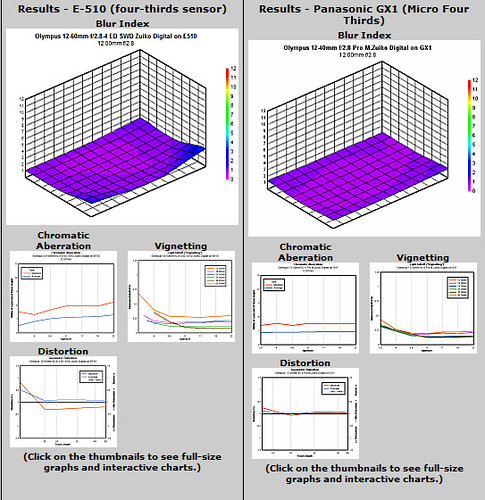
The only reason for writing this short blog post is to talk about the graphic at the top, where the test results of a Digital Zuiko 12-60mm f/2.8-f/4 (on the left) are compared to the new M.Zuiko ED 12-40mm f2.8 PRO lens on the right. I didn't make this comparison, but another photographer did on Flickr (click the image for a larger view and to go to Marty's Flickr stream).

Why do I care about the graphic? I have bellyached for some time about how Olympus isn't making native µ4:3rds versions of various 4:3rds lenses, in particular the 12-60mm and the 50-200mm. Turns out that maybe, just maybe, Olympus has decided to create newer µ4:3rds lenses that are superior to those two regular 4:3rds lenses. The charts show that the optical performance, at least via optical chart measurement, of the 12-40mm is superior to the older 12-60mm. When you compare the two lenses, you come up with the following points:
  • Constant aperture (f/2.8) of the 12-40mm vs variable (f/2.8 to f/4) of the 12-60mm.
  • Smaller and lighter 12-40mm vs 12-60mm.
  • Lower cost 12-40mm vs 12-60mm.
  • Native µ4:3rds mount of the 12-40mm, which means much faster focusing.
  • Silent operation of the 12-40mm, great for video.
The only downside (if you want to call it that) to the 12-40mm is the loss of the longer focal lengths beyond 40mm. It would appear Olympus made the engineering tradeoff to produce a shorter focal length range in order to achieve better optical and physical operation, producing by all accounts the successor to the 12-60mm. Given my personal druthers I'd trade a constant f/2.8 aperture across all focal lengths for 20 less mm in a cold New York minute.

Later this year Olympus will release its second PRO lens, a 40-150mm constant f/2.8 zoom, which just might be the superior replacement to the highly regarded (by me at least) 50-200mm. This will give the Olympus photographer an equivalent focal length range (in 35mm terms) of 24mm to 300mm in two zooms, with decent light gathering performance.

What is interesting is how those two lenses compete head-to-head with the Panasonic 12-35mm f/2.8 and 35-100mm f/2.8 zooms. Now if Olympus can just stay in business long enough to make buying these lenses worth your while...

last updated 13 may 2014

2014-02-15

Olympus OM-D E-M5 Review

Olympus OM-D E-M5 body only with Panasonic Lumix 20mm
Concept: 4 out of 5
Execution: 4 out of 5
Yeah, but: The last Olympus camera I'll probably buy.
The Long Version:

This is a review that has been a long time coming. The Olympus E-M5 was introduced nearly two years ago on March 2012, and went on to become anointed as Camera of the Year on many photo web sites.. It took me nearly a year to finally purchase my copy in January 2013.

Since that time I've taken about 10,000 images with the E-M5. It has traveled with me down to Key West and half-way across the world to Japan. In all that time the camera has done yeoman duty, delivering images that I've been more than satisfied with. Other cameras have been introduced since (the E-P5, E-M1, and most recently the E-M10), but the E-M5 stands as Olympus' real breakthrough µ4:3rds camera, where everything finally "clicked." Olympus may tweak the design as it has with the newest OM-D cameras, but Olympus will be hard pressed to release the kind of camera the E-M5 represents unless there's a substantial leap in sensor technology, the kind of advance that led to the E-M5.

Prologue

In the past I've harshly criticized Olympus, specifically their E-P3 Pen and their Four Thirds E-5 cameras. I felt at the time of their release (and still feel to this day) that those two cameras were thrown out as a weak sop to their existing user base. They were DOA cameras, iterations built with ageing technology from a camera company that appeared to be growing more irrelevant in a stiffly competitive market.

All that changed abruptly in February 2012 with the announcement of the OM-D E-M5. The Olympus OM-D E-M5 is the complete antithesis of the E-P3 and the E-5. Here was the camera I'd been hoping for, waiting for. It didn't just merely meet my expectations, it exceeded them in so many ways.

The µ4:3rds Olympus E-M5 is the embodiment of the best of Olympus' legendary camera creativity and engineering. It is in my not so humble opinion the best digital interchangeable lens camera that Olympus has ever built. It is an "instant legend", a camera to rank with the OM series of film cameras (specifically the OM-1 through OM-4) as well as the FourThirds E-1, the E-M5's "distant" digital ancestor.

Before we go further let me make one thing perfectly clear: The E-M5 isn't a perfect camera. No camera ever made or currently being made is perfect, regardless of price. The E-M5 can't do everything. But what it can do is does exceptionally well, especially for the price being asked; the E-M5 is worth every penny.

Construction

OM-D E-M5 body cast magnesium alloy frame. Photo courtesy of  Gakuranman

The E-M5 is built around a cast magnesium alloy shell in much the same way as the top-end FourThirds E-1, E-3, and E-5 were built. It's also weather sealed, many say to the same high level as the aforementioned E-1, E-3, and E-5. I have yet to push my luck with the E-M5 in Florida's rainy weather as I once did with the E-3, in part due to the lack of a complete stable of weather-proof lenses in µ4:3rds native mount.

The only weather-proof Olympus µ4:3rds lenses to go with the body are the M.Zuiko 12-50mm zoom, the M.Zuiko 60mm macro, and the PRO 12-40mm zoom. Panasonic makes two zooms they claim are dust- and moisture-resistant; the Lumix 12-35mm f/2.8 and 35-100mm f/2.8. With these five lenses you can build a reasonable weather resistant system, one that's highly portable. Of the five that I mention, the M.Zuiko 12-50mm is the only one I own.

Olympus has a much wider weatherproof lens selection in Four Thirds. For a number of years I had the Zuiko Digital 12-60mm and 50-200mm High Grade lenses out of that collection. Olympus has, for whatever reason, yet to release native µ4:3rds versions of these lenses. While I've certainly missed those lenses, the mitigating factor for me has been the jewel-like µ4:3rds primes I've purchased as alternatives. The emphasis for FourThirds was all zooms, all the time. The µ4:3rds emphasis seems to have shifted back towards a major dependence on primes, such as the Panasonic 14mm and 20mm, the Olympus 12mm, 17mm, and 45mm, and many super-fast primes from third-party manufacturers like Voigtländer and SLR Magic. The only problem is that, with the notable exception of the M.Zuiko 60mm macro, none of the primes are weather sealed.

Operation

The EM-5 body is petite, even with both HLD-6 grips installed.

Olympus OM-D E-M5 decked out with the HLD-6 grips and Panasonic Lumix 20mm

E-M5 with rear touch screen swiveled out

Right-rear edge showing rear controls
HLD-6 Grips

In practice I tend to use the camera with just the horizontal grip installed most of the time to gain a bit more purchase with my right hand. I still have to remove the grip to change the body battery, but that's not a problem. I appreciate the side door loading of the SDHC/SDXC card instead of having to get it out of the battery compartment, like you have to with the newest E-M10 and every other Pen I've ever owned. That's a feature that Olympus has kept only with the E-M1.

Buttons

Many have complained about the squishy buttons. The buttons are not squishy; they're soft. What they lack are the solid detents that non-weather-sealed buttons have. In my case, I've just learned to push until the button stops or else some other visual cue shows that button contact has been made. It's not that big a deal in reality. The only button that really matters on a camera is the shutter release, and all those buttons (on the body and both grips) have the classic half- and full-press detents, which is all that really matters. Reading some reviews you'd think the camera was critically flawed because of its other buttons; trust me it's not.

Shutter

The shutter is remarkably quiet, as quiet as my one remaining FourThirds E-1. That sounds almost like high praise until you realize that the E-1 is nearly 10 years older and is flipping a mirror as well as tripping a shutter. The E-M5 should actually be quieter than the E-1, almost silent. I wish some times the E-M5 shutter were totally quiet, but it's not.  Regardless the sound coming from the E-M5 is what the Brits might call "refined", with absolutely no vibration to be felt in the body.

IBIS

The five axis image stabilization actually works, especially with video. And that's something of a waste on me as I seldom shoot video. As for still images I tend to shoot in fairly bright light with a fast lens, and let the camera auto-select the ISO. The shutter speed thus stays at 1/focal length or faster, negating the need for IBIS. As I said, it really does work if I force it to pick a very slow shutter speed, but for the most part the feature is a waste on me.

As for IBIS noise, I really had to work to hear it, and once firmware upgrade 1.5 landed, I set the IBIS to turn on only when pressing the shutter half-way down. From that point forward it became, for all practical purposes, totally quiet.

Physical Issues

My copy of the camera has developed tiny cracks around two of the three screws along the bottom edge of the swing-out LCD. This was the source of yet another Internet fiasco about the E-M5. It hasn't effected the operation of the LCD in the least, and unless you stick your nose right down into the camera you can't see them. I forgot where I first heard this, but my camera doesn't live in a museum, it gets used in the real world. If it develops a few dings, scratches, and cracks along the way, but continues to operate just fine, oh well...

External LCD

The most productive way I use the camera is with the external LCD swung out so that I can carry the camera at waste level, and touch set up so that I can touch the rear screen to both focus and trip the shutter. Oddly enough I seldom focus through the eyepiece any more, preferring to use the larger back LCD to compose and then touch to expose. I no longer focus, then recompose. The only time I use the eyepiece is in very bright sunlight because the back can get washed out, and in very dark venues to make sure light from the LCD doesn't cause a disturbance. Because of the design issue with the eye-level sensor, I don't have the E-M5 automatically switch. Instead I use the button on the side of the eyepiece to switch manually. Some complain, but I personally prefer it that way anyway.

And the one key feature I like about the rear LCD screen is that it DOES NOT pick up finger grease. Every other camera with LCDs does.

Recommendations

What I'm about to say will probably annoy the few true Olympians who come across this review, but here it is:

(Maybe) Don't buy Olympus.

Why? Because, after nearly a decade using Olympus equipment, from my first E-300 to my E-M5, I think I've had enough. Yes, I do love my E-M5 and won't give it up. But Olympus is now in the exploitative phase of their camera development, and I truly hate that phase. Since the release of the E-M5 they've been dropping a new variant of the E-M5 every six months or so.

I'm tired of being bombarded with how superior/more fun the next release is, and how this specific feature trumps the E-M5's equivalent, etc, etc, etc. Olympus will work really hard to deliver an innovative product (E-1, E-3, E-P1 and E-M5) then spend up to the next three years between innovative releases riffing the same thing over and over again. I consider the E-M1 and E-M10 to be little more than riffs on the E-M5.

When the E-M1 came out, with its built-in grip negating the HLD-6 grip, I knew then what was going to happen. Want to add an E-M1 as a second body? Well, guess what, you can't reuse the grips and possibly other gear. There is no sense of a camera system except at the lens mount.

And speaking of lenses, no matter how many you may have to choose from in µ4:3rds, a lot of them are crap, and duplicate crap at that. Prime example is the 14-42mm kit lens. Just how many 14-42mm kit lenses does Olympus have to keep producing? They're at four right now just for µ4:3rds.

And the 12-50mm kit lens? You can tell how the bean counters got ahold of that design and stripped it down to its bare essentials. Why else do you have macro at 43mm? And f/3.5 to f/6.3? Would it have really killed them to give us f/2.8 to f/4, or possibly f/5.6? And macro at 50mm?

The best all-around lens Olympus ever made in my opinion was the regular FourThirds 12-60mm f/2.8-f/4 lens. We have yet to get that quality of lens in µ4:3rds, the 12-40mm not withstanding. I've given up hoping for a µ4:3rds version that lens, and so many others.

Olympus is in the mode of charging premium prices for very small cameras, and for the kind of money they're asking I'm looking around at other camera makers.

So, if I had to do it over, who would I have bought or who would I buy now, and why?

Buy Nikon

I've owned Nikon. The last Nikon I bought (and still have) is the N90 in 1989. It was rugged enough to survive my use and disuse, and then when my second daughter got it for undergraduate use in 2008, it still worked just fine.

When I started to really buy into digital, it was in 2006 with the Olympus E-300. When I got really serious about digital it was December 2008 and the Olympus E-3. As they say, if I'd only known then what I know now...

If I had to do it over I'd probably have bought a Nikon D-300 instead of the Olympus E-3. Today, if I were getting started, I'd consider the D3300, D5300, and D7100. I know that Thom Hogan rails against the lack of Nikon-made DX lenses, and Ken Rockwell rants against Sigma, but you can build a quite useful DX-based system with any of those cameras and some excellent quality Sigma lenses to fill in Nikon's gaps. Keep in mind that the F mount goes back to the original F-1 of 1959. That means you can put any F-mount lens, good to trashy, on those bodies and shoot away, especially if you learn how to manually focus.

And let's face it, with 24MP and no low-pass filter on the current APS-C sensors across all  three cameras, what you're buying as you move up to the D7100 is better handling and environmental sealing (at the D7100 level). I'm not a big "FF" [sic] sensor fan, don't have the talent to justify spending that much money, and I've never believed in the cost of buying any of the "FF" [sic] bodies from anyone.

APS-C is more than adequate. No matter how much Olympus and Panasonic sensor tech advance, the same advances show up on APS-C sensors, and physics being what it is, the APS-C sensors will always out-perform µ4:3rds. I learned this, ironically, with the Sony NEX-5N, and chose to ignore it (Sony being another brand I would stay away from). Just to further underscore the point the photos of the E-M5 in this review were taken with my Sony NEX-5N and Sigma 30mm f/2.8 at ISO 400. And the NEX-5N has a 16MP APS-C sensor.

Buy Samsung

I've seen a lot of work produced by the NX-300 and its good. Samsung also has a decent range of lenses to choose from. And Samsung isn't going away any time soon, either. There is a new faux SLR mirrorless coming, the NX-30, which has the NX-300 sensor and a built-in SLR-like EVF. Samsung has the sensor portion nailed, at least at the lower ISOs.

What Not To Buy

There are other brands I would stay away from, and they're listed below.

Don't Buy Sony

Sony's biggest problem is lack of a decent selection of decent lenses across all four of their lens lines. They have the original Minolta 'A' mount (APS-C and full frame) and the NEX E mount (again APS-C and now full frame). Sony has four poorly filled out lens lines. Sony would rather toss out a new body (such as the very recent α6000, their replacement for the NEX-6 and NEX-7) with a given mount and sensor size than some decent lenses. Unless you have the patience of a saint waiting for a given prime or zoom not currently covered, you're better served by just about anybody else, even by the cameras I don't recommend.

Don't Buy Canon

My issue with Canon goes back to 1987 when they switched mounts, and I've never gotten over it. They're certainly a larger camera company than anybody else, including Nikon, but I just get the impression they're the GM of the camera world, and they're selling the camera equivalent of Chevy cars and trucks; boring, poorly made, and asking too much. You may like your Chevy, but the last Chevy I owned was a 67 Nova, and it was so bad I bought an import (Honda CVCC) in 1978 and have never bought domestic since. I dislike Canon about as much as I dislike GM.

(Maybe) Don't Buy Fuji

This will probably engender consider hate on the Internets. But I have my reasons. You're paying too high a premium for smallness in cameras, and not getting all that much back. I'm speaking primarily about all the original X series cameras, which I have held and used, and not the X-T1, which I haven't held nor used. The X-T1 may be Fuji's saving grace, so I reserve the right to change my mind on this one.

Fuji's true saving grace is their growing lens line. Lenses made with the same style throughout, and made of metal. That, and the fact you can buy Sigma and Zeiss lenses to fill out any holes in the Fuji X mount line, to name but two one third party makers of note.

What Next?

I'm emotionally and financially tapped out when it comes to buying camera equipment. I haven't bought a single thing in µ4:3rds in some time, not body nor lenses nor specialist gear. I'll use what I've got until it either breaks or I just give it up. The E-M5 is an excellent camera, and I have more than enough lenses to cover the focal lengths I care about.

And perhaps that's as it should be. Stay off the forums, stay out of the stores, and stay out shooting with the gear.

Update 12 May 2014

Olympus' financial results for the Imaging Group (the groups that makes cameras), for the last quarter and fiscal year, have been reviewed by Thom Hogan on his web site, Sans Mirror.  Needless to say they're very ugly. The highlights are:
  • Olympus failed to meet its own mirrorless forecast by 41%
  • Olympus lost money again, to the tune of 4.2 billion yen, and have forecast another loss this coming fiscal year.
  • One third of all Olympus cameras are being sold in Japan, and that was down 5%
  • SG&A (selling, general and administrative) were over 50%, meaning it costs more to make each camera than it makes selling each camera.
If you're into championing underdogs, then Olympus is the best example going in that category. But if you're concerned that the company you buy your camera from is going to be around for a while, then you might want to look elsewhere. I personally have been eying Sony, since (at this point in time) you can get a Nex 6, on discount, with a 16-50mm power zoom, for around US $530. And that's not a bad price. And for those who point out the lack of Sony lenses, might I point out that you can buy Zeiss and Sigma E-mount lenses to fill the gaps.

I love my E-M5 and will use it until it will work no more. But as for buying anything new from Olympus (like an E-M1 or E-M10), I won't unless some miracle occurs at Olympus.

Update 17 May 2014

Maybe I should follow my own advice (see above) about Sony. Or use the same financial yardstick on Sony I used on Olympus. Whether it's Sony's overall corporate losses that have mounted into the tens of billions over the past years, or just the losses in single billions over the past three years in Sony Imaging, Sony isn't doing well.

In imaging alone, Sony has racked up their third consecutive fiscal year loss of $1.29 billion (FY14 ended this past March). They peg that loss to declining sales in video cameras, and an overall decline of 2% in cameras in general.

In the midst of all this they've managed to introduce a refresh of the RX100, the MK III for $800, which is drawing rave reviews for its latest features that photographer's really give a damn about, such as a faster zoom at the telephoto end and a built-in pop-up EVF. And they've announced a selling price of $2,500 for the α7s. But still no new E-mount lenses.

As for Samsung, my definite buy has shifted to a maybe buy. I'm seeing too much flogging of the cameras. I finally got to hold an NX30, and to be honest I wasn't all that impressed with the NX30 in person. I'm a big Samsung booster when it comes to notebooks (Series 5 and Series 7), Android devices (Galaxy Tabs and Galaxy S4) and HDMI TVs. But that's based on personal use. Before I spend the amount of cash Samsung is asking for the NX30 it has to pass the personal feel test, and the NX30 isn't making it.

That leaves Canon, Fuji, Nikon, and Panasonic. And the last two are facing their own corporate fiscal challenges. Photokina is later this year, so Canon may pull off new hardware to excite me. Something worth the financial hit, something more worthwhile than a white SL1. Or I may lay hands upon the Holy and Blessed Fujifilm X-T1 and finally fall under the sway of its Reality Distortion Field and buy it.

last updated 17 may 2014

Star Trek Into Darkness


Concept: 1 out of 5
Execution: 0 out of 5
Yeah, but: Plot holes big enough to fly starships through.
The Long Version:

"Star Trek Into Darkness" first hit theaters (or theatres) in May of 2013. It played well to its intended audiences around the world, racking up nearly a half billion dollars in ticket sales before its run was done. It scored a respectable 87 on Rotten Tomatoes. It was a generally entertaining enough movie, being released for a second round of studio money gorging with its release on Blue Ray later in September. It had the usual cast of characters, and it had Benedict Cumberbatch. What wasn't to like?

The plot, or more precisely, the plot holes. The most egregious occurred early on in the movie after Cumberbatch's character John Harrison, a.k.a. Khan, shot up Star Fleet's leadership while it was conveniently meeting high up in an insecure skyscraper. Harrison showed up in a small one-person aircraft and with his infinite ammunition gun proceeded to open fire on a completely un-defended conference room fronted by an equally convenient floor-to-ceiling window setting that stretched from one end of the conference room to the other, until Chris Pine as Jim Kirk managed to single-handedly cripple Harrison's ship and eventually cause it to crash.

But before it crashed, John Harrison managed to trigger a very magical transporter that was so small it fit into the same cockpit area as Harrison. So magical it managed to transport him to the Klingon home world of Qo'noS, a mythical world located some 112 light years away from Earth. Not only do you see Harrison transported away from an aircraft rapidly spinning out of control, but mere seconds later you see him transported to the surface of Qo'noS, none the worse for wear.

Let me make sure I have all this straight. Harrison is in possession of a small, portable transporter that can move him from a spinning machine on a rotating planet (Earth) orbiting a star (our Sun) with the whole ensemble traveling through intergalactic space in our galaxy, to another planet, rotating on its axis, orbiting a completely different star, and that whole ensemble moving in an independent but generally same direction, 112 light years from Earth.

With that kind of capability, why the hell do you need starships?

With that kind of a transporter, why not just use the same method to go and get him? Oh, wait. You only made one? And the one you found in the wreckage, the one that told Scotty where Harrison had fled to, wasn't working well enough to beam his pursuers to Qo'noS, or him back? How convenient!

In fact, why wasn't this particular type of transporter used to transport anti-matter weapons (or just raw bits of anti-matter) all over the surface of Qo'noS and just blow the planet to bits? What's amazing is that Harrison didn't invent this, Scotty did (with Spock Prime's help) in the first movie. I knew when Spock Prime beamed Scotty and Kirk back on board a star ship speeding at warp velocities in the first movie that JJ Abrams had managed, without really trying, to completely destroy any rational reason for his big starship in the whole series. With just a small scene in the second movie, JJ Abrams managed to make all his big shiny starships totally irrelevant. Every. Single. One.

The 2014 silly season for movies is about to start up again. I think, from this point out, I'm going to sit the whole thing out. At least anything from JJ Abrams and his kindred directors.

last updated 15 february 2014

2013-07-09

Sigma 19mm and 30mm F2.8 EX DN E-Mount Lenses, Part 2

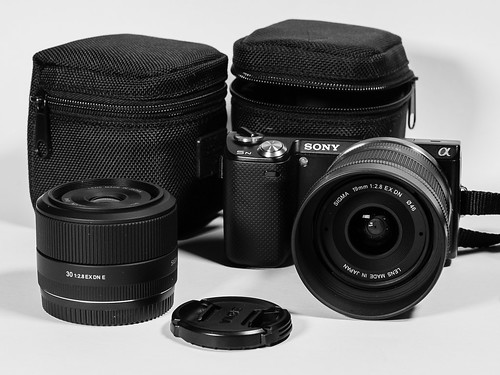
NEX-5N with Sigma 30mm and 19mm
Concept: 3 out of 5
Execution: 3 out of 5
Yeah, but: My how time flies.

The Long Version: Back in mid-February I wrote part 1 of this review with every intention of following up with part 2 in a reasonable amount of time. Sometimes life intrudes into plans, such that your idea of reasonable evolves into not what you originally intended. It's good that I'm just now getting around to writing part 2, because it's allowed me more time to work with these lenses and the NEX 5N. The singular flaw with all camera reviews is that everyone is so eager to get their review out in front of the public before anyone else that the reviews wind up reading pretty much the same and pretty thin on meaty real-world use. I don't have that excuse this time for writing a thin, meatless review.

Behind the Counter, Key West Florida, Sigma 30mm, f/2.8, ISO 2000, 1/60s

Unless a camera manufacturer is grossly incompetent (and Sigma has skirted that particular edge more than once), gear performance, and especially a lens' optical performance, is pretty much the same across contemporary lenses; that is to say, of good to excellent optical performance, even in the face of 100% pixel peeping. Personally what I want to know about a lens is more mundane, such as how well will it work in the real world under varying conditions and how well it holds up under use. I have toted the Sigmas all over a good portion of Florida since purchasing them, and under my ham-handed amateur use they have worked flawlessly and held up quite splendidly.

Conch Train, Key West Florida, Sigma 19mm, f/2.8, ISO 100, 1/800s

In part 1 of the review I talked about how, in spite of the fact the Sigma lenses lacked in-lens image stabilization, I purchased them anyway primarily because I'm so cheap and I refused to make any major (read: expensive) lens purchases for the NEX 5N. Fortunate was I to have chosen to purchases these specific lenses, simply because I didn't need in-lens image stabilization for how I use these lenses.

Under practical use the Sigma lenses shoot far above their discount cost to me. As an avowed amateur photographer I have neither a burning need nor an infinite amount of cash to purchase every top drawer lens that is offered in E-mount (such as the Zeiss Touit lenses). At $99/lens (and even double that price), the Sigma 19mm and 30mm are some of the best lenses you can purchase for your Sony NEX cameras. For photographers on a budget, a good deal of enjoyment comes from reducing the economic pressure by not tying up large sums of cash in eye-wateringly expensive camera equipment. Based on that metric the Sigma lenses are thus very, very enjoyable.

Ringer, Key West Florida, 30mm, f/3.2, ISO 100, 1/160s

An irrelevant issue that has cropped up on the various forums is the mechanical noises the lenses produce. The first noise comes from shaking the lenses, either accidentally or deliberately. Both lenses use an internal focusing element. When the NEX 5N is powered up, so is the lens, and the internal focusing elements are locked into place. Powered off the internal elements are allowed to float. I've given both a fair deliberate shake, and you can hear a soft 'thunk' as the elements hit the extremes of their travel. That noise means nothing. If all you can do is shake your camera in public to hear the lens make a noise, then perhaps you need to find another hobby.

Big Boat, Key West Florida, 30mm, f/5.6, ISO 100, 1/60s

The second irrelevant issue is the noise produced by the aperture. During focusing the aperture blades will snap open to the aperture's widest opening, the lens will focus, then the aperture blades will snap back down for proper exposure. This has been described in various fora as "lens chatter." The Sigma's aren't the only lenses to exhibit this; for example you can spend over $500 for the µ4:3rds Panasonic Leica 25mm f/1.4 and experience the exact same behavior. From a practical standpoint it means nothing to the overall operation of the lens. The noise is low enough that you have to be very close to the lens to hear it, let alone care about it.

Other than the two nit-noids just listed both lenses focus silently and very quickly, which is 99.9% of the time they're in use.

Better Than Sex, Key West Florida, 19mm, f/2.8, ISO 100, 1/3200s

The strengths of the Sigma 19mm and 30mm far out weight their perceived weaknesses. Combined with the Sony NEX 5N they create a modest but quite enjoyable compact system, especially for travel. I spent a fair amount of time just carrying and using the 5N and the two Sigma lenses. If you can find the older versions of these lenses at the discount prices then by all means pick them up. Even the more current 'Artist' versions are reasonable, given that more metal is used in their construction, even at twice the price ($199) of the first generation. The Sigma lenses really strike a nice series of compromises between image quality (very good), use of materials, construction, and overall operation. For the budget photographer who's more interested in making photographs than making a status statement, you really can't go wrong purchasing the Sigma 19mm and 30mm for your NEX camera.

Picket Fence, Key West Florida, 30mm, f/2.8, ISO 100, 1/80s
Bike Stop, Key West Florida, 30mm, f/5.6, ISO 250, 1/60s
Sunrise, Key West Florida, 30mm, f/5.6, ISO 100, 1/800
Rent Me, Key West Florida, 19mm, f/2.8, ISO 100, 1/80s
Rail Bridge, Bahia Honda, Florida, 30mm, f/6.3, ISO 100, 1/640s

Technical

All photographs taken hand-held with the Sony NEX 5N and post processed in LR 4.4 and the Nik Collection.

2013-06-02

Panasonic Lumix DMC-GX1 Silver, Part 2

Panasonic Lumix GX1 with Lumix 2.5/14mm

Concept: 3 out of 5
Execution: 3 out of 5
Yeah, but:  It may be small but it takes a while to write about it.
The Long Version:

This is the second part of a two-part thewsreviews review. Part one is here. Which means it's based on a paid-for copy and it touches on what strikes my fancy, which may not strike yours. Now onward...

As I mentioned earlier the GX1 is a "dense" feeling little camera with what appears to be an all-metal body (with the notable exception of the top plate and the battery cover on the bottom). By the time you have any lens mounted and the battery in the base you know you have a substantial piece of machinery. The only camera in my arsenal that feels anything like this, if not better, is the Olympus OMD E-M5. Which brings me back to the battery cover. It is as cheap as the rest of the body isn't. It's thin and flimsy and may very well wind up being broken before too much longer. Which means I better look for a few spares from somewhere...

To be fair to Olympus, the E-M5 is better in my not so humble opinion. And I would imagine, not having held one, that the Panasonic GH3 is in the same league as the E-M5, at least as far as build quality. But still and all the GX1 is no slouch (with the notable exception of the battery cover), and for the discounted prices you can find for the GX1 at right now it makes an excellent camera.
Top deck with major controls
The top controls for the GX1 are clustered around the upper right. You're limited to the on/off switch (a real switch, extra points for that), the mode dial, the shutter release, an IA push button, and a movie start/stop push button. The IA and movie buttons are small and set flush into the deck to avoid accidental triggering. You can argue if this is the best place to put these buttons, especially the movie button, but considering that Olympus and Sony have put them on the back where they are easier to reach by hand as well as accidentally trigger, I think putting them here was a good idea. Filming is not the same as taking stills, and I don't mean the obvious. It's a different process and mindset where you don't have to have the movie trigger as easily accessible as say the shutter trigger. In my mind Panasonic made the right placement choice on this camera.

The only controls I pay any attention to on the top deck outside the shutter release is the mode dial, and it stays on 'A' (aperture control) almost the whole time. I might go to 'S' (shutter control) for a deliberate slow shutter speed, or 'M' (manual) when I want to set the exposure once and have every other image come out the same (and I'll set ISO and white balance as well in that case). But I've yet to dive into and try any of the other modes (C1, C2, SCN (scene) and that funky symbol which is Panasonic's version of art filters).

By the way, that funky symbol, which is supposed to be an art pallet and paint brush (yes, I once took art in college), selects Creative Control on the camera, from which you can select from eight different controls. I've yet to try them out and if I do will probably review them separately. For now I'm busy just using the GX1 as a "real" camera, whatever that means.

The movement of the mode dial and on/off toggle are solid and stiff, which is what you want. Too many of the Olympus Pens, specifically the E-P2, have dials that are too easy to twist especially when the bodies are held against the body and you're moving (i.e. walking) about.
Back with major controls and Q.Menu selecting RAW + largest JPEG output
The back of the camera is dominated by an LCD with touch capabilities. This makes the third such camera with this capability I've purchased. The first was the Sony NEX 5N, and after less than 30 minutes I went into its menu system and turned it off it became so frustrating. The second is the OMD E-M5, and it is so good I just about can't use the camera without it. The GX1 falls right in the middle of those two. While I certainly won't disable that feature I've yet to find where it will become a critical feature. Perhaps over time I'll learn to love it more. It does have touch-to-trigger on the LCD like the E-M5, a feature where touching the LCD will focus the camera's lens before taking the photograph. I love the way it's implemented on the E-M5; it's hair-trigger in a good way and the focusing on the E-M5 is lightning fast and accurate. It's a great tool for picking the focus point in rapid action or complex scene. The GX1 by comparison is slower. If my photography is more measured (meaning slower, and a lot of it is) then the GX1 touch-to-focus is just as accurate. It's just not nearly as fast, and I attribute that in large part to the slower focusing speed of the GX1.

Many users, myself included, talk about the Super Control Panel available on Olympus LCDs. It's been a camera feature since at least the Olympus E-3 for me, and it has undergone refinements over time. You access it by pressing the 'OK' button on the back of Olympus cameras. For some Olympus cameras (E-3, E-M5) it sits right in the middle of the LCD, while on others (E-P2, E-PL1, E-PL2) it wraps around the bottom and right edges. In both cases the rounded buttons around 'OK' serve as navigation buttons on the Super Control Panel to pick a feature and adjust it. It's a fast way to set the most-often modified camera features. The Panasonic GX1 has something similar called the Q.Menu, which has its own dedicated button on the bottom, right next to the LCD's bottom right corner. You hit the Q.Menu button, then navigate around to pick a feature to modify, modify it, and then touch Q.Menu or the shutter to exit. I can't say if it's better or worse than the Olympus, which is actually a good thing. I will say this, it's leagues above the Sony menu system.

If there's a nit to pick over the Panasonic menu system it's that the text rendering is crude when displayed on the LCD. It looks like somebody in management decided that the older menu software was Good Enough, and refused to spend a little more money to clean up the text. Olympus did a good job cleaning up the text in their menus starting with the E-PL2, which is the same vintage as the GX1. The GX1 is a nicely refined little camera, which makes the crude menu text just that much more jarring when you see it.

There are two definable hardware function buttons on the back of the GX1 labeled Fn1 and Fn2. You can find where to set these in the menu. They are worth setting up. There are two "soft" buttons on the LCD which slide out from the right edge, Fn3 and Fn4. They are not worth setting up. They are difficult to "pull out" from the right edge of the LCD and do nothing but frustrate you when trying to reach them. The only reason for trying to use the slide-out tray is to enable or disable the LCD touch-to-trigger functionality. Once I had it enabled I pretty much left the slide-out tray alone.

The one lone wheel on the GX1 is buried in the plastic thumb rest on the top right corner. It's a surprising control in that it's both a wheel and a push-button switch. I use it to control aperture and EV compensation, and that's accomplished by the push-button action. You press the wheel in to set either aperture or EV compensation, then turn the wheel to make the changes. You know which function you're accomplishing because the values for aperture and EV change color on the bottom of the LCD. If you can change it, it's yellow. If you can't, it's white. The wheel is stiff enough not to be accidentally turned, and the button stiff enough not to accidentally press it in. It's a clever engineering solution and I like it. Yes, it slows you down over a two-wheel design, but I change aperture (or shutter speed) a lot more than EV compensation so it's not that big a difference for me.

I'm sure there's lots of additional features I haven't delved into, but I've had the camera now for about a week. My attitude is if I can't dive into a camera after opening the box and start taking photos after about 30 minutes, as bad as they might be at first, then it's a crap camera. None of my cameras are that way, although two were over the years and they were sent back. I can grumble about certain features, but the key is how quickly can I configure the camera to my tastes and what kind of results can I get. All of my cameras pass that basic test with flying colors (or black and white... sorry).

This is the last of the 20mm photos. It was processed in LR 4.4 to bring out color and detail, of which the 16MP sensor has loads. And that's another reason for getting the GX1. It's sensor resolution matches the E-M5. The E-M5 sensor has a lot more exposure headroom than the GX1 and I've seen it, but in a lot of circumstances the GX1 can produce acceptable, if not beautiful, results in the right kind of light that doesn't stretch the sensors exposure limits (and isn't that true about every camera ever made?).
Monochrome, ISO 3200, straight out of camera
These two photos were produced from the same GX1 raw image. I used touch-to-shoot to bring the E-M5 text into focus, and let the rest of the focus fall where it may. I have auto ISO enabled up to ISO 3200 and that's what you have here, a pair of ISO 3200 images. The upper photo, if you care to pixel peep, has a lot of processing artifacts in the darker regions that look very crystalline in nature. The bottom photo was produced in LR 4.4 and Silver Efex Pro 2, and has a more grainy, film-like noise. I don't mind noise, I just wish it were more like large clumps of random developed silver. The hard part about doing this is I like the tones of the in-camera photo. I tried to match that look with SEP, but wound up pulling too much up out of the shadows to suit my tastes. Under most circumstances, even up to ISO 3200, I would probably accept it and move on. Shrink the image down enough, put it on the web, and nobody will know nor care. Only a pixel-peeping idiot like me would even bother.
Monochrome, ISO 3200, post processed

These last five photos were taken with the GX1 and the Panasonic Lumix 2.5/14mm lens. I have this lens and chose this combination because of all the interesting press that's been generated lately by cameras such as the Nikon Coolpix A, the Ricoh GRD V (which Matthew dreams about constantly these days) and the Fuji X100/s. All of these cameras have an APS-C sensor, an equivalent 28mm with a max aperture between f/2.8 and f/2 (the Fuji). The Lumix 14mm is a 28mm equivalent, and its max aperture of f/2.5 sits between those other cameras. Whether the GX1 plus 14mm is as good as those other cameras with fixed focal length lenses is open to considerable subjective interpretation, so have at it. I do know that if I have the 14mm on the GX1 I can slip the combination into a rather capacious pocket on my cargo shorts and go anywhere incognito (well, maybe the cargo shorts draw attention, but that's another issue). And the same thing can be said for the even faster 1.7/20mm.

The monochrome photos are straight out of the GX1. The color photos were manhandled by me in LR 4.4 and Color Efex Pro 4. Enjoy.

last updated 2 June 2013

contact me...

You can click here for Matthew's e-mail address.